SHOPPING MALL
Create a vital space
We transform shopping centers, making them spaces where people come together, socialize and relax.
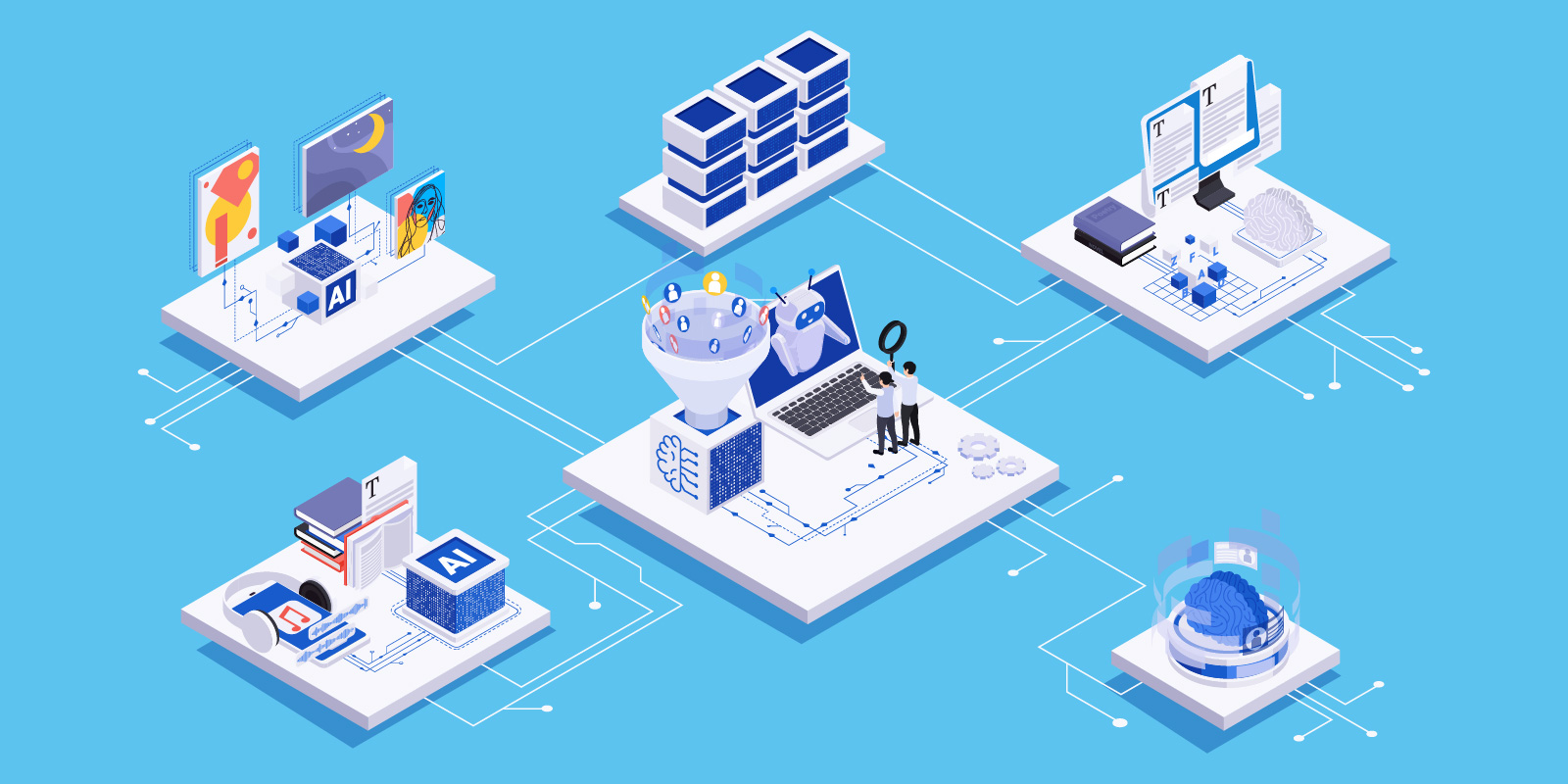
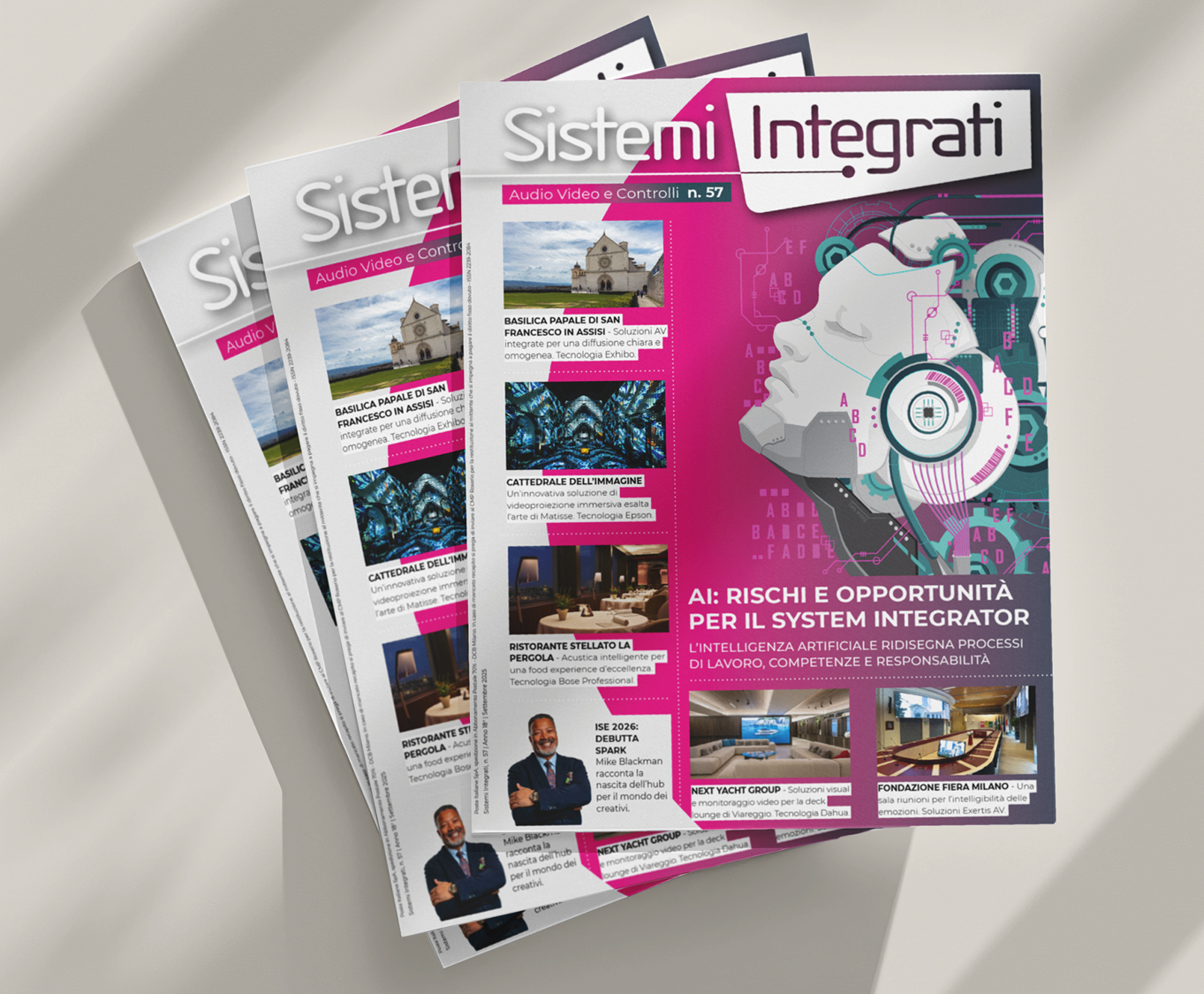
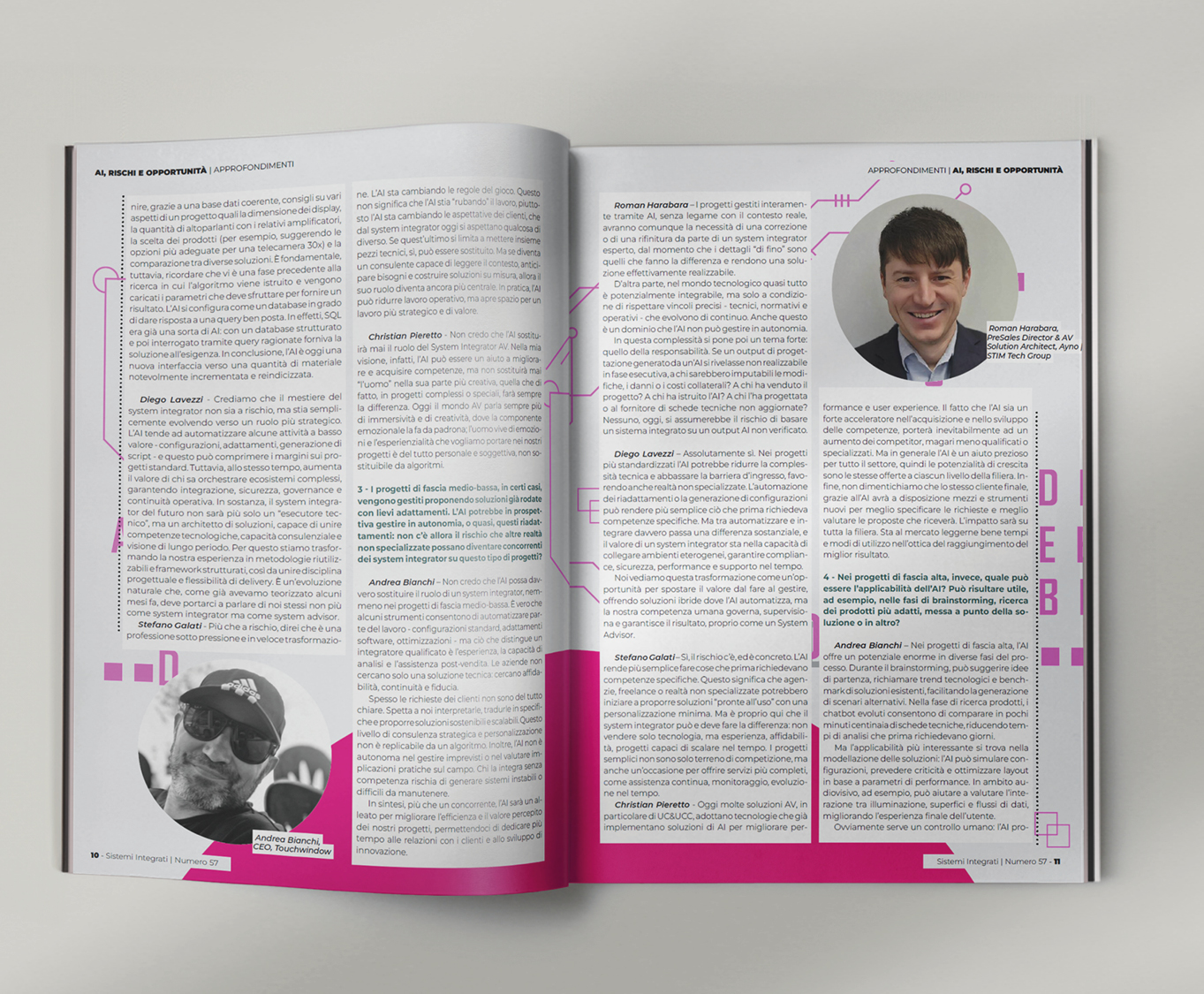
AI is entering the workflows of system integrators in a quiet yet definitive way. Anyone working daily on AV architectures, automation systems, and interactive environments has already noticed it: on a purely operational level, specific research and technical analysis tasks that once required days can now be completed within a single work session. Project documentation is produced faster, comparisons between alternative technological solutions become more structured and less dependent on individual expertise. At this level, the change has already happened — the real question is what it will mean over time for those who design, integrate, and manage complex AVL systems.
At Touchwindow, we are approaching this new era in a practical and systematic way. AI supports technical analysis phases — product scouting, hardware and software compatibility checks, exploration of protocols and configurations in rapidly evolving environments — allowing us to work more reactively on projects, shifting the focus from information gathering to interpretation and decision-making. On the installed systems side, we are developing approaches to read operational data more intelligently, with the goal of transforming monitoring from reactive to predictive: anticipating anomalies, scheduling maintenance activities, reducing downtime, and improving the operational continuity of the environments we manage.
Some fear that the rise of Artificial Intelligence will reduce the value of the system integrator, particularly in more standardized projects. The risk is real, but it must be interpreted correctly: AI lowers the barriers to entry for those offering pre-packaged solutions, but it does not replace the ability to understand a context, translate often undefined needs into coherent architectures, ensure integration between heterogeneous systems, and oversee the solution over time — not just at commissioning.
What truly changes is the client’s expectation. Increasingly less focused on the hardware itself, and increasingly more attentive to the operational value and overall experience the system delivers. In this scenario, the system integrator who incorporates AI into their internal workflow does not simply become more efficient in execution, but gains analytical and simulation capabilities that make it possible to bring alternative scenarios to the design table, anticipate critical issues before they emerge, and build stronger, more data-driven proposals. This is the natural evolution toward a new hybrid figure that the industry is beginning to define as the system advisor a comprehensive technology partner, rather than merely a component supplier.
In more sophisticated projects, where experiential, narrative, and interactive components are just as important as the technical ones, AI finds particularly fertile ground for application. While the Solution Architect’s vision remains central, AI frees and amplifies cognitive resources that would otherwise be consumed by low-value repetitive tasks.
Exploring concepts in parallel, rapidly verifying the technical feasibility of an idea, simulating AV configurations even before consolidating the final system design — these are areas where AI accelerates the process without diminishing its quality. At Touchwindow, this translates into a richer concept and solution design phase, where the ability to propose alternatives to clients — and support them with data — has become an integral part of our working method. The part that remains exclusively human, and that makes the real difference in experiential projects, is the ability to create something people can feel, not just use.
The most significant medium-term impact concerns service delivery models. AI makes it possible to transform a substantial portion of the system integrator’s work from one-time project execution into scalable continuous services:
At Touchwindow, we are working in this direction by developing solutions where artificial intelligence becomes an enabling tool integrated into the ecosystems we design — from management and automation systems with Triatic, to advanced digital signage, data platforms for big data analysis, and interactive environments for museums and experience centers. The goal is for the relationship with the client not to end with project sign-off, but to continue generating operational value — and trust — over time.
The challenge is not deciding whether to use AI. The challenge is integrating it with method, critical thinking, and design awareness: every output must be interpreted and validated before becoming a system decision. AI proposes. Responsibility for the final result — technical, design-related, and consultative — remains with the system integrator.
We transform shopping centers, making them spaces where people come together, socialize and relax.

Solutions to attract visitors, entertain them and inform them through digital engagement.

Take advantage of gaming dynamics to entertain, train and stimulate deeper engagement.
Acquedotto Pugliese takes care of citizens and the territory every day, ensuring a more efficient and sustainable use of water resources. Room control is the digital heart of this system, as innovative as it is indispensable.
Touchwindow creates a turnkey installation at the DAMA Technopole in Bologna, featuring audio-video solutions, automation, and reconfigurable spaces.
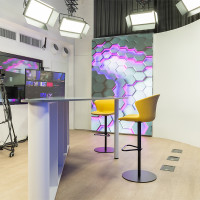
A new technological setup to meet the communication needs of the Region.